The Allure of Tabletop Gaming
Discover the captivating world of tabletop gaming—from strategic duels in Magic: The Gathering to epic quests in Dungeons & Dragons.
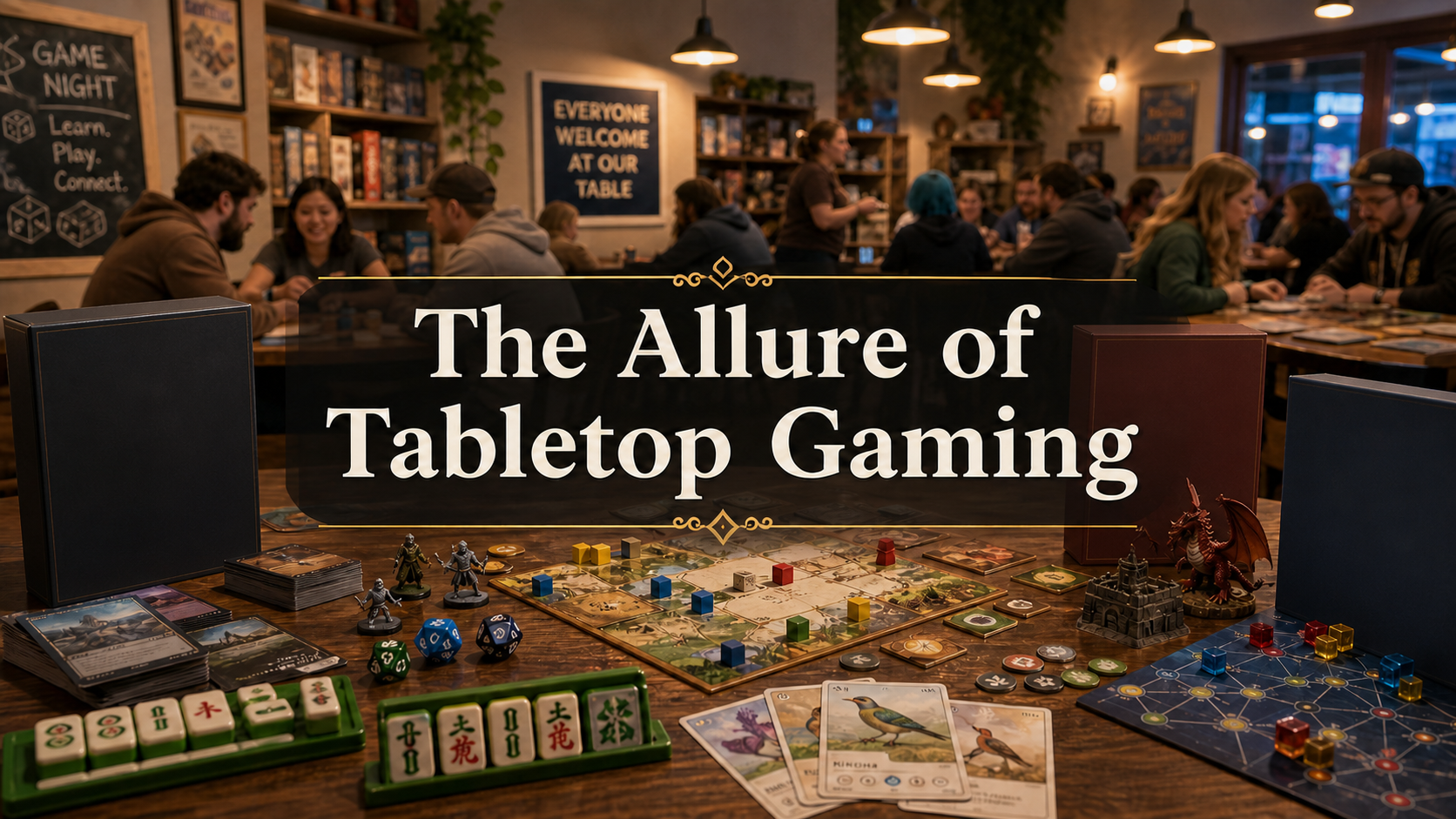
My son-in-law introduced me to Magic: The Gathering a few years ago. I have never been a big gamer, but I found the strategy, art, and immersion intriguing. I had played Dungeons & Dragons a few times in my teens, but that was, well, too long ago.
What caught my attention was how dedicated, and sometimes obsessed, the players were. There was a great deal to learn, and they wanted to learn it.
This was near the beginning of my Between Silicon and Soul journey, when I was trying to understand the differences between generations and how my kids’ world differs from my own.
What I have learned since is that tabletop gaming is much broader than Magic. It provides a physical place, physical touch, and an opportunity for people to be together. I took much of that for granted through family gatherings and years of working in offices.
That has changed how I think about the businesses and institutions around us. We have made many individual activities easier to do alone, from shopping to entertainment. Shared activities still require somewhere to go and someone to organize them. We should be deliberately creating places where people can build this kind of shared life.
The interest is already there
In a May 2026 YouGov survey, 65% of American adult citizens said they liked or loved board games, including 62% of men and 67% of women. Only 28% played at least monthly. yougov.com
The business is growing, too. Circana reported 45% growth in U.S. Games & Puzzles dollar sales in the first half of 2026, although trading cards were a major driver and those sales include collecting. www.circana.com
Participation tells us something more useful for this discussion. Hasbro reported that more than a million unique players participated in organized Magic play during 2025, up 22%. Its active Wizards Play Network had grown to more than 10,000 stores worldwide. investor.hasbro.com
I see an opportunity in the distance between enjoying a game and having somewhere to play it regularly. A product can be purchased in minutes. Finding a group, learning the rules, and becoming comfortable enough to return take longer.
What people find at the table
A 2023 study of 1,603 board game enthusiasts found that social interaction and strategizing were their highest-rated motivations, ahead of competition. This was a sample drawn from hobby communities. Even among dedicated players, the attraction extended well beyond winning. journals.sagepub.com
Magic helped me understand the pleasure of learning a complex system. The art and imagined world gave that learning a setting I enjoyed. Mahjong combines its own mental commitment with tactile pleasure and a regular social occasion. Dungeons & Dragons gives people characters to inhabit and a shared adventure to shape. Wingspan brings nature and bird illustrations into strategic play. Cooperative games such as Pandemic give a group a common problem to solve. www.apr.org
The physical experience matters. Researcher Melissa Rogerson’s work identified the qualities of the objects themselves as a source of enjoyment, alongside social interaction, intellectual challenge, and variety. pursuit.unimelb.edu.au
People can care about beautiful tiles, illustrated cards, or painted figures and still want a demanding game. Aesthetics, competence, and companionship can all be part of the same attachment.
A room needs someone to make it work
Putting tables in a room is a beginning. People also need a reason to arrive, someone to introduce them, and enough help to get through their first game.
A study based on 43 interviews with women board game players found that perceptions of gaming as a male space could make entering the hobby harder. Welcoming groups, other women participating, and supportive staff helped people feel they belonged. www.open-access.bcu.ac.uk
That should influence how businesses design these spaces. The experienced players should feel at home, and a newcomer should be able to ask a basic question without embarrassment. Different games, beginner sessions, and clear expectations give more people a way in.
Wizards’ Magic Academy program makes this explicit. Its guidance calls for staff or mentors to help beginners, guided practice, and an invitation to another event. Teaching and continuity are part of the retail offering. WPN
Those details determine whether an interested visitor becomes someone who has a place to go next Thursday.
A business case for shared time
For retailers, this calls for a broader view of what physical space can provide. A place where people learn and play together gives them a reason to visit repeatedly. Staff can become trusted guides. Customers can introduce friends. Products acquire meaning through their use.
The opportunity is to become a place people make plans around.
A bookstore could partner with a local game host. A café could reserve a predictable evening for a group. A shopping center could support recurring play across several tenants. These are ideas to test locally, with attention to who wants to participate and what they can afford.
The economics need to work. Space and staff time have costs. Table fees, refreshments, lessons, product sales, or shared sponsorship could help sustain a program. Businesses should measure the cost of hosting, whether people return, whether newcomers stay, and the sales associated with participation. A crowded first event tells us little about whether a group will last.
Employers have a role as well. Making a room available for voluntary play, with time people can actually use, can help colleagues meet outside their usual work roles. Libraries, churches, and community centers can provide access for people whom a commercial setting would exclude.
My youngest daughter’s pet and house sitting work can occupy seven days a week. Her experience reminds me that an invitation has to fit the life someone has. Reliable schedules, manageable costs, and shorter sessions deserve as much thought as the furniture.
What we choose to make room for
Businesses make decisions every day about how people use their time and where they spend it. Those decisions can make gathering easier. They can give people somewhere to learn, contribute, and become familiar to one another.
There is commercial value to explore here. There is also a responsibility to treat participants as people whose enjoyment and relationships matter in themselves. A gathering loses something when every moment becomes an opportunity to sell.
Human dignity includes room for friendship, curiosity, and play. We should be willing to devote space and resources to those parts of life.
When my son-in-law introduced me to Magic, I saw an intriguing game and some very dedicated players. I now see a reason for retailers, employers, and community institutions to take shared play seriously. We have places to buy the games. We should make it easier to find a seat at the table.